
Lineage
Lineage
About
| Full Name | Osvaldo Alves de Albuquerque |
| Nickname | Grand Master Osvaldo Alves |
| Date of Birth | 1938 |
| Black Belt Date | Unavailable |
| Rank & Title | 9th-Degree Grand Master Red Belt (Faixa Vermelha) & IBJJF Technical Director |
| Promoted By | Carlos Gracie Sr. |
| Signature Specialty | Side Control Mechanics, High Guard Systems & Advanced Takedown Integration |
| Lineage | Mitsuyo Maeda ➔ Carlos Gracie Sr. ➔ Osvaldo Alves |
Historical Achievements & Technical Milestones
- 9th-Degree Grand Master Red Belt — Attained the highest possible technical status in Brazilian Jiu-Jitsu, representing the ultimate pinnacle of knowledge.
- IBJJF Technical Director — Served as a foundational operational leader, structuring early tournament rule sets and technical standards for the federation.
- Side Control Revolution — Completely overhauled the Gracie family’s early understanding of side control (the 100-kilo/lateral position) by introducing advanced pinning mechanics.
- High Guard & Wristlock Pioneer — Officially credited with inventing and optimizing the modern “High Guard” and highly efficient wrist-locking submission chains.
- The Kodokan Seminar Invitation — Achieved the historic distinction of being the only Brazilian national ever invited to conduct an official martial arts seminar at the legendary Kodokan in Tokyo, Japan.
Overview
Grand Master Osvaldo Alves de Albuquerque was a legendary 9th-degree Brazilian Jiu-Jitsu Red Belt and one of the most important revolutionaries in the history of submission grappling. Operating as a master tactician during the 1970s and 1980s, Alves served as the Technical Director for the IBJJF, introducing game-changing positions, submission systems, and training philosophies that forever redefined the martial art. Serving as an elite technical consultant to generational icons and world champions, his cross-disciplinary innovations fundamentally reshaped the genetic code of modern jiu-jitsu.
The Judo Scholarship to Japan
Osvaldo Alves was raised in the iconic beachfront neighborhood of Copacabana in Rio de Janeiro, Brazil. He initiated his martial path at six years old, learning traditional Judo under a Japanese champion named Fujimata. At age seven, his life intersected with the founding family of BJJ when his close friend Reyson Gracie invited him to cross-train at the neighboring Gracie Academy, leading him to spend his developmental years growing up alongside the family.
Almeida excelled spectacularly in standard Judo, capturing back-to-back Pan-American Gold Medals in Cuba and Canada by the time he was 17 years old. His elite competitive momentum earned him a prestigious athletic scholarship from Gama Filho University to travel directly to Japan. Alves spent five intensive years training full-time at Tenri University—a global epicenter universally revered for producing the planet’s absolute sharpest newaza (ground groundwork) specialists.
Revolutionizing Gracie Jiu-Jitsu
When Alves returned to Rio de Janeiro from Japan, he brought a massive arsenal of sophisticated ground-fighting concepts that the Gracie family had never witnessed. Prior to his arrival, Gracie Jiu-Jitsu focused almost exclusively on the closed guard and fundamental top control, leaving their side-mount configurations incredibly basic. Alves systematically overhauled the family’s entire structural blueprint of the “lateral” (side control) position, introducing advanced weight distribution patterns and transition counters.
Furthermore, he injected an elite-tier Judo takedown matrix directly into the academy’s curriculum. Reyson Gracie and a young Rolls Gracie were the primary students to cross-train with him, which immediately catalyzed Rolls’ historic dominance across the local Judo tournament circuits. Alves is also universally credited with innovating effective sport wristlocks and designing the early blueprints for the modern High Guard system, bridging the gaps between standard self-defense and high-performance sport application.
Elite Coaching and Bypassing the Brown Belt
In the 1980s, Master Alves directed a highly successful, legendary training environment out of his private residence. The mat space was notoriously tiny, only accommodating four active practitioners rolling at any given time. To maximize performance, his students would endure brutal, high-intensity athletic conditioning on the sand of Rio’s beaches before entering the room to drill hyper-precise techniques.
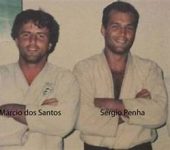
Alves famously broke strict, long-standing sport tradition by promoting two of his premier purple belt prodigies directly to the rank of black belt, entirely skipping the mandatory brown belt rank. Both athletes vindicated his visionary judgment: Sergio Penha went on to push pound-for-pound king Rickson Gracie to the absolute brink in the toughest fight of his career just months later, and Fredson Paixão went on to win every single major tournament in the black belt division. Furthermore, following a street scuffle with local antagonists while traveling through northern Brazil, Alves founded the very first formal BJJ academy in Manaus, Amazonas. The gym evolved into a historic regional powerhouse, producing world-class champions like Bibiano Fernandes and master coach Henrique Machado.
A Global Legend
Master Alves’s pedagogical expertise was so universally respected that he became the only Brazilian national to ever receive an official invitation to deliver a formal master seminar at the legendary Kodokan Judo Institute in Tokyo, Japan. Throughout his career, multiple generations of elite black belt world champions and historic sport legends—including Amaury Bitetti, [Zé Mario Sperry](https://bjjbloodline.com/profile/?teacher_id=198), Paulo Filho, and Carlos Gracie Junior—sought out his private tutelage to refine their positional mechanics, ensuring his lineage remains permanently anchored at the absolute vanguard of global grappling history.
Black Belts Promoted 16








Videos
No videos yet.